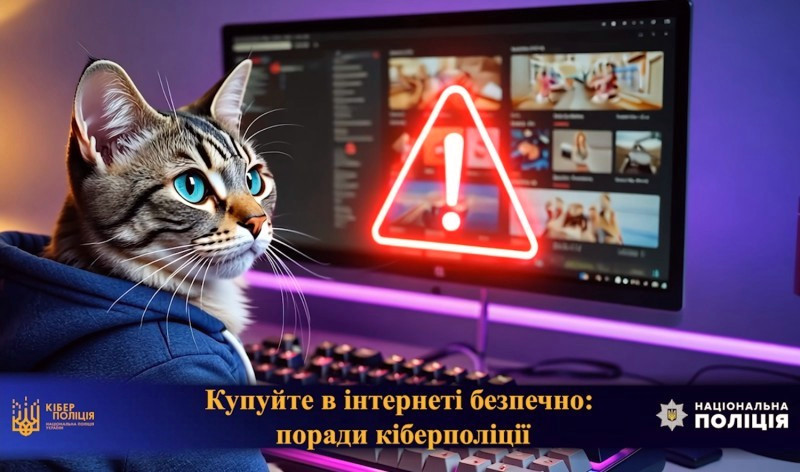
Protecting Your Finances While Shopping Online

Online shopping has become a common method for purchasing goods and gifts for many people, but with convenience comes risks. Cybercriminals continually refine their tactics, making it essential to know how to protect your money and personal information.
To avoid falling victim to scammers while shopping online, follow these straightforward yet effective rules:
Opt for cash on delivery. Scammers often sell non-existent products at attractive prices. Their goal is to receive a prepayment before vanishing with your money.
Check prices across the market. Malicious actors create fake pages for popular stores and offer "exclusive" discounts. If an offer seems too good to be true compared to other sellers – it's a red flag.
Verify links carefully. Avoid clicking on suspicious links from emails, social media, or messengers. Scammers create phishing websites that visually mimic legitimate stores. Pay attention to the URL – even a minor difference can indicate a counterfeit. Also, check for the secure protocol https (indicated at the start of the URL).
Do not enter payment information on unfamiliar sites. Before making a payment, check the store's reputation: read reviews, look for information on independent resources. If the platform offers payment upon delivery, take advantage of this opportunity.
Never share your card details with third parties. Your card number, CVV code, and one-time confirmation codes from the bank are keys to your funds. Bank employees will never ask for this information.
Use a separate card for online payments. Top it up right before making a purchase to reduce the risk of losing money in case of data compromise.
Ensure that you have 3D Secure enabled. This technology provides an additional verification step during online payments. However, the store must support it too – if the platform does not require payment confirmation, it may be a warning sign.
Avoid making payments over public Wi-Fi networks. Open networks can be compromised, allowing criminals to intercept confidential information.
Check QR codes in public places. Criminals may place QR codes leading to fake websites to capture confidential payment data. Verify the URL after scanning and avoid QR codes from unknown sources.
For more recommendations on payment security, visit the website of the National Bank of Ukraine.
Stay cautious – and your online shopping can be safe!
The Cyber Police Department of the National Police of Ukraine